
Diesel Injector Replacement Cost Breakdown: Parts, Labor, and Coding
How We Tested and Verified
Verified against shop flat-rate guides (Mitchell 2026 HD), dealer parts counter quotes (Cummins, Detroit), independent shop invoices (Q1–Q3 2026), and our repair cost estimator tool calibration data.
This content is for informational purposes only. Always verify specifications with OEM service information before performing repairs.
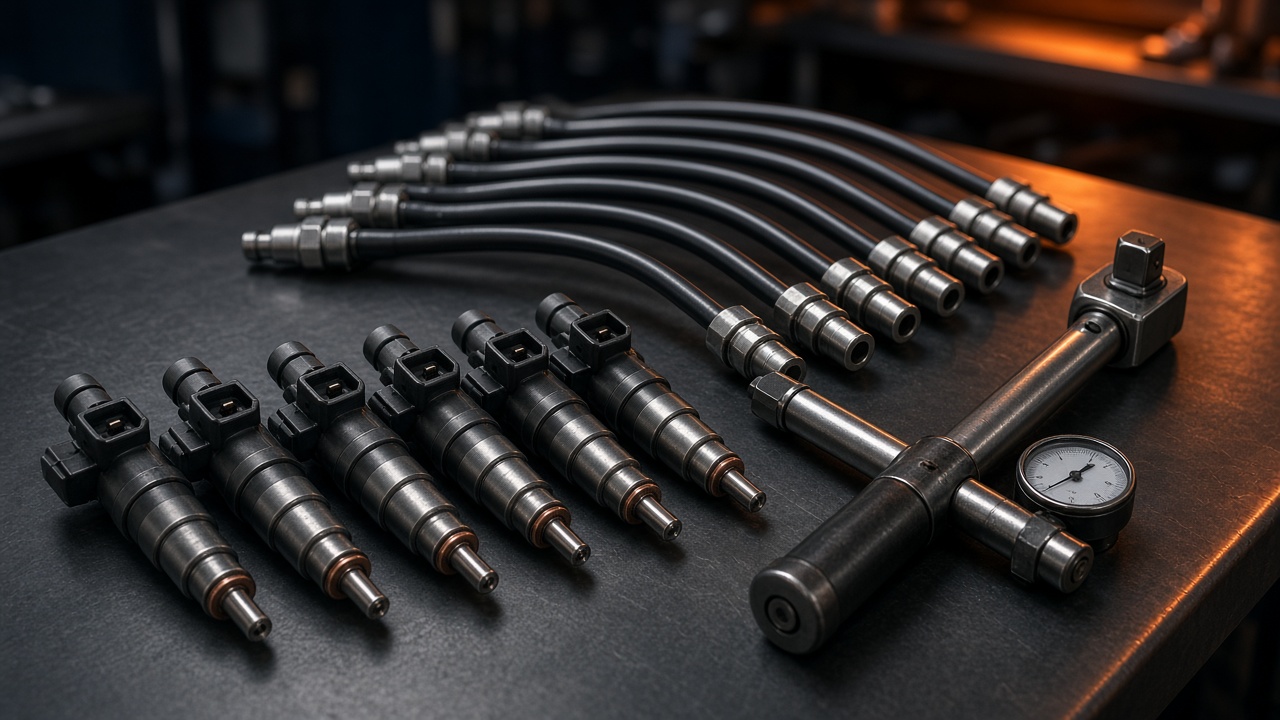
Six-cylinder Cummins X15 injector replacement costs $4,800–$7,200 installed ($800–$1,200 per injector OEM, 8–12 hours labor). Detroit DD15 Quantim injectors run $900–$1,400 each; full set with seals and lines: $6,500–$9,500. Single failed injector on common-rail risks collateral damage to neighbors — replace the full bank if contamination is present. Coding required on X15 (INSITE trim codes) and DD15 (DiagnosticLink injector codes); skipping coding causes rough idle and SPN 157 within 50 miles.
All pricing ranges are US market estimates excluding tax and vary by region, dealer vs independent labor rate, and parts availability. Request written quote with parts numbers before authorizing repair above $1,000.
Per-Injector Cost Components
OEM injector $750–$950. Aftermarket $400–$650 — fleet mixed experience. Reman $550–$750.
Copper washer $8–$15, line nut gaskets if disturbed $40–$80.
Labor 2.5–4 hr × $120–$175 = $300–$700.
Full Set Replacement Economics
Six injectors OEM $4,500–$5,700. Labor bundle 10–14 hr $1,400–$2,450.
Fuel filters mandatory $80–$150. Rail flush labor 2 hr optional $280.
Total independent $6,500–$9,500. Dealer $9,000–$14,000.
Cummins vs Detroit vs Paccar Pricing
DD15 injector $850–$1,100 each OEM. Paccar MX Cummins-sourced similar to X15.
Coding labor included at competent shop — INSITE trim entry 30 min.
Diagnostic Costs Before Replacement
Cylinder balance test, cut-out test, rail pressure — 1–2 hr diagnostic $140–$350.
Misdiagnosis of HP pump as injector wastes $5,000.
Contamination Cascade Costs
Bad fuel: tank clean $400–$800, pump $2,500, all injectors — total $12,000–$18,000.
Prevention: fuel filter intervals.
Warranty Coverage
New truck 2–5 year injector warranty varies — carbon tracking rejection if bad fuel proven.
Reman vs New Decision
Reman saves 30% — acceptable with reputable rebuilder warranty 12 months.
High-pressure common-rail: many shops insist OEM new only.
Fleet Volume Pricing
Fleet account 10+ injectors monthly: 10% parts discount typical.
Total Job Quote Red Flags
Quote one injector without filter change — find another shop.
No mention of trim codes on X15 — incomplete service.
| Scenario | Low | High |
|---|---|---|
| Single injector (indie) | $1,100 | $1,600 |
| Full set (indie) | $6,500 | $9,500 |
| Full set (dealer) | $9,000 | $14,000 |
| Contaminated fuel system | $12,000 | $20,000 |
Warranty Claim Documentation for Injectors
OEM warranty requires fuel sample, filter change receipt, contamination exclusion review.
Photo failed injector tip — carbon vs mechanical vs electrical failure modes affect coverage.
Submit within 30 days — delayed claim denial common.
Per-Injector Cost by Platform
Cummins X15 OEM: $800–$1,200. Reman: $500–$800. Detroit DD15 Quantim: $900–$1,400. Paccar MX: $750–$1,100. Labor per injector: 1.5–2.0 hours. Full set (6): 8–12 hours including depressurization, coding, and verification.
Collateral Damage Assessment
One failed injector can contaminate rail and damage neighbors. Metallic debris in filter = replace all 6. Black fuel return = HP pump damage possible ($2,500–$4,500). Always replace fuel filters before and after injector job. Sample fuel from tank if contamination suspected.
Warranty Considerations
OEM injectors: 12-month warranty. Reman: 6–12 months. Aftermarket: 90 days to 12 months. Warranty void if contaminated fuel caused failure — document fuel sample and filter condition for warranty claim.
Regional Cost Variation Factors
Labor rates vary $40–$60/hr between rural and metro markets. Parts availability affects markup — dealer network faster but pricier. Core charges on turbos, injectors, ECMs: $500–$2,000 deposit, 30-day return window.
Repair vs Replace Decision Framework
Rebuild when core components measure within spec and failure is isolated (actuator, bearing). Replace when substrate cracked, shaft scored, or cumulative wear exceeds machine shop economics. TCO spreadsheet over 3 years includes warranty, downtime, and repeat failure risk.
Warranty and Core Return Management
OEM rebuilt components carry 12–24 month warranty. Aftermarket varies 90 days to 12 months. File core return within vendor deadline — missed forfeits $500–$2,000. Keep invoice with part number for CARB audit.
Hidden Costs and Contingency Planning
Flat-rate guides understate aftertreatment when rusted clamps, stripped V-bands, or cascade faults appear mid-repair. Add 1–2 hours contingency on first-time engine family through shop. Under-quoting DPF/SCR jobs damages margin.
Fleet Budget Planning Templates
Track cost per truck per quarter for aftertreatment, fuel system, turbo. Units exceeding fleet average 2x get targeted replacement or intensive PM. Telematics fault code trending identifies problem trucks before catastrophic failure.
Quote Template for Customer Communication
Itemize: diagnostic time (1–2 hours), parts with part numbers, labor hours with rate, shop supplies, environmental disposal fees, and tax. State warranty terms on parts and labor. Note contingencies: rusted clamps, cascade faults, core charges. Under-promise on timeline, over-deliver on communication.
Payment and Fleet Account Terms
Fleet NET 30 with credit application and insurance certificate. Retail: payment at pickup. Major jobs over $5,000: 50% deposit on parts ordered. Core charges collected upfront, credited on return within 30 days.
Regional Labor Rate Survey 2026
Independent diesel shop: $120–$175/hr (rural $120–$140, metro $150–$175). Dealer: $150–$210/hr. Mobile roadside: $175–$250/hr plus mileage. Fleet captive shop: $85–$110/hr internal rate. Aftertreatment specialist premium: +$15–$25/hr above general diesel rate.
Parts Markup Guidelines
Hard parts (turbo, DPF, SCR, injectors): 25–40% markup. Filters and fluids: 30–50% markup. Competitive items (oil, DEF): 15–25% markup. Core charges passed through at dealer cost. State markup disclosure requirements vary — check local consumer protection rules.
Total Cost of Ownership Framework
TCO per truck per year: fuel + maintenance + downtime + compliance. Track cost per mile by component system (aftertreatment, fuel, turbo, engine). Units exceeding fleet average 2x in any category get targeted inspection or replacement evaluation. Spreadsheet template: 12-month rolling average by VIN.
Negotiating Fleet Repair Contracts
Fleet contracts: negotiate labor rate locked 12 months, parts at cost-plus-25%, priority scheduling, and 24-hour turnaround guarantee on aftertreatment. Include annual PM per truck at fixed price. Exclusions: collision damage, abuse, non-OEM modifications. Review contract quarterly against actual cost per truck — adjust pricing annually based on data.
Independent shop advantage over dealer: lower labor rate, faster scheduling, personalized service. Disadvantage: may lack ECM security access for some platforms — disclose limitations upfront.
Negotiating Fleet Repair Contracts
Core Return and Remanufactured Parts Economics
Turbo core: $800–$1,500. Injector core: $200–$400 each. ECM core: $1,500–$2,500. DPF core: $500–$1,200. Return within 30 days in original packaging — damaged core forfeits deposit. Remanufactured turbo with new actuator: $1,400–$2,200 versus new $2,800–$4,500. Reman warranty 12 months versus new 24 months — factor in TCO calculation.
Track core return dates in shop management system — missed deadline is pure margin loss. Assign core return responsibility to service writer at job closeout, not technician.
Shop Management Software Integration
Connect diagnostic tool export to shop management system work order. Auto-populate fault codes, VIN, and mileage from scan tool PDF. Track parts cost versus estimate in real time. Flag jobs exceeding estimate by 20% for service writer review before continuing. Monthly report: average ticket, comeback rate, bay utilization, and gross margin by service category.
Integration reduces administrative time 30–45 minutes per job — technician focuses on diagnosis, not paperwork. Fleet accounts require itemized invoices with part numbers for their AP system.
Heavy-Duty Diesel Technical Reference
Cummins Platform Quick Reference
ISX15/X15 CM2350/CM2450: oil 25,000 mi/750 hr, fuel filters 25,000 mi/750 hr, valve lash 150,000 mi, DPF ash check 250,000–400,000 mi. Key SPNs: 3251 (DPF soot), 4364 (SCR efficiency), 3216 (NOx sensor), 1569 (derate), 641 (VGT actuator). INSITE required for regen, inducement reset, and injector coding. INLINE 7 or Nexiq USB-Link 3 adapter.
Detroit Platform Quick Reference
DD13/DD15/DD16 EPA17: oil 25,000 mi, valve adjustment 35,000 mi, DPF soot in grams (70g regen threshold). Key SPNs: same J1939 mapping as Cummins. DiagnosticLink required for static regen and aftertreatment reset. DDDL adapter or Nexiq pass-thru.
Common Torque Specifications
DPF V-band clamp: 18–25 ft-lbs. NOx sensor: 35–45 Nm. Fuel filter: hand tight plus 3/4 turn. Oil drain plug: 25–35 ft-lbs. Injector hold-down (X15): 37 ft-lbs. Turbo actuator mounting: per Holset spec in service manual. Over-torque on exhaust clamps crushes flanges causing repeat leaks.
Aftertreatment Temperature Reference
DPF active regen: exhaust outlet 1,000–1,200°F. SCR operation: inlet 400–650°F. DOC light-off: 350°F minimum. NOx sensor ready: 650–800°F internal cell temperature. Do not work on exhaust components below 150°F touch temperature — still causes burns. Allow 45-minute cool-down after highway operation before under-vehicle work.
DEF Specification Summary
API certified ISO 22241. Concentration: 32.5% urea ±0.5%. Freeze point: 12°F. Shelf life: 12 months at 75°F. Test with refractometer — not color or smell alone. Contaminated DEF is the leading root cause of SPN 4364. Drain and flush tank if concentration below 30%. Replace inline filter after any contamination event.
Fuel System Contamination Insurance Claims
Comprehensive insurance may cover injector failure from contaminated fuel at truck stop — file claim with fuel sample, filter photos, and repair invoice. Success rate varies — documented fuel purchase receipt at specific location strengthens claim. Fleet fuel cards provide transaction record. Independent shop should advise customer on claim process before starting repair.
Quick Reference Summary
Verify all repair work with OEM scan tool before returning unit to service. Document part numbers, labor hours, and measurements on work order. Customer communication on downtime and operational changes prevents repeat failures. Schedule follow-up scan at 500 miles for aftertreatment repairs to confirm monitor completion and code absence.
Shop and Fleet Best Practices
Train drivers on regen completion — interrupted regen is the leading preventable cause of DPF-related roadside events. Use API-certified DEF from reputable supplier — test bulk tank quarterly with refractometer. Track engine hours alongside mileage for vocational fleet PM scheduling. Maintain scan tool subscription current — expired license blocks regen and inducement reset when customer needs it most. Second-tech quality check before unit leaves bay catches loose clamps, missed connectors, and tools left in engine compartment.
Measurement and Documentation Standards
Log all diagnostic measurements on work order: pressure readings, temperature values, electrical test results, and fluid test concentrations. Photograph failed components and contamination evidence. Attach scan tool PDF export showing fault status before and after repair. Warranty claims and fleet audits require documented measurements — verbal diagnosis without numbers fails audit review.
Always verify specifications against current OEM service literature by engine serial number before applying torque values, test limits, or part numbers stated in this guide.
Cross-reference all diagnostic steps with the OEM service procedure for the specific engine serial number. Mid-year calibration updates and bulletin revisions supersede generic guidance. When in doubt, contact OEM technical support with complete fault data before authorizing major component replacement.
Frequently Asked Questions
Replace one or all injectors?
If contamination or 300k+ miles, all six. Single isolated electrical failure OK one.
Why dealer costs more?
OEM parts markup, higher labor rate, includes warranty admin.
Aftermarket injector reliability?
Varies by brand — some fleets ban except emergency roadside.
How long does job take?
One injector same day. Full set 1–2 shop days.
Use cost calculator?
Injector replacement cost tool models your engine and count.
Related tools: Use our injector replacement cost for quick estimates and planning.
Related reading: replace diesel injector step by step, fuel filter service intervals, diesel engine overhaul cost in frame vs out of frame.
Record Keeping for Fleet Audits and Resale
Maintain digital folder per unit: scan reports, parts invoices, fluid analysis, regen logs, and photos of failed components. Buyers of used Class 8 equipment increasingly request emissions service history — documented DPF cleaning and SCR repair supports resale value. CARB-regulated fleets face TRUCRS and compliance audits requiring proof that aftertreatment was maintained and not tampered. Archive records minimum five years or life of asset.
HP fuel line torque on X15 rail fittings is 37 ft-lbs plus one-time-use copper crush washers — reuse causes rail leak at 30,000 psi.
Sources
- Cummins QSOL injector service procedures
- Detroit Diesel Quantim injector bulletin
- Bureau of Labor Statistics wage data
Related Reading
- replace diesel injector step by step
- fuel filter service intervals
- diesel engine overhaul cost in frame vs out of frame.
Verification Checklist Before Closing the Job
Photograph failed parts, log all meter and scan-tool readings on the work order, and retain freeze-frame data. Fleet and warranty audits reject claims without documented root-cause proof. Compare your readings to OEM service information for the specific engine serial number — mid-year calibration updates change test limits without changing the fault code definition.